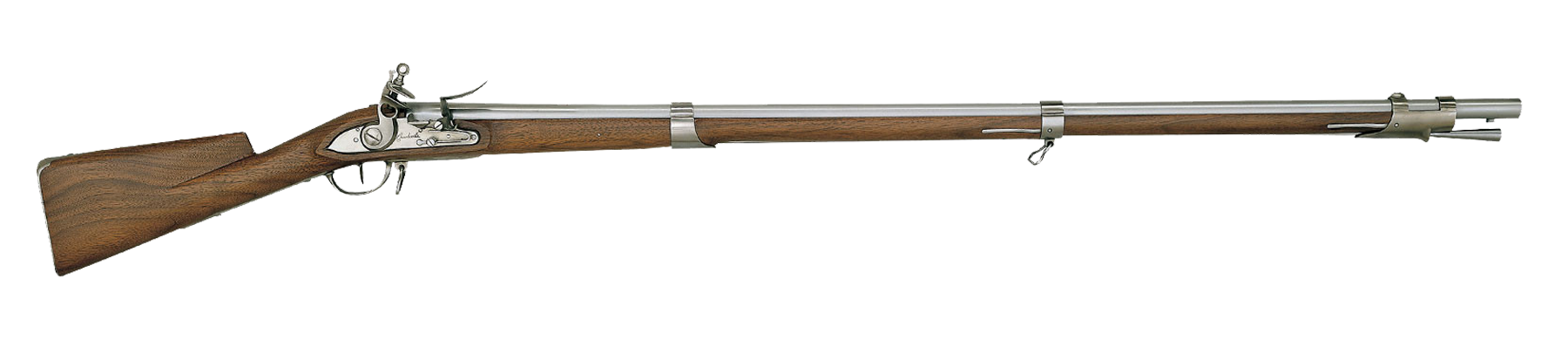
Kentucky Pistol
One of the typical American flintlock pistols, developed while manufacturing the Pennsylvania rifles by colonial gunsmiths. The stock was made of cherry tree, walnut and maple. The Kentucky pistol was used primarily for self-defense and close range combat during the years of the American Revolution.
Our reproduced pistol is available in three different versions:
Standard (S310) with walnut stock, case hardened lock, blue barrel and brass fittings.
Maple (S312) with tiger maple stock, old silver lock finish, brown barrel and brass fittings
NAVY MOLL (S354) with tiger maple stock, case hardened lock, blue barrel and brass fittings. This model is further enhanced by the brass butt cap.
The pistols are available in .45 / .50 / .54 calibers.
Buy now
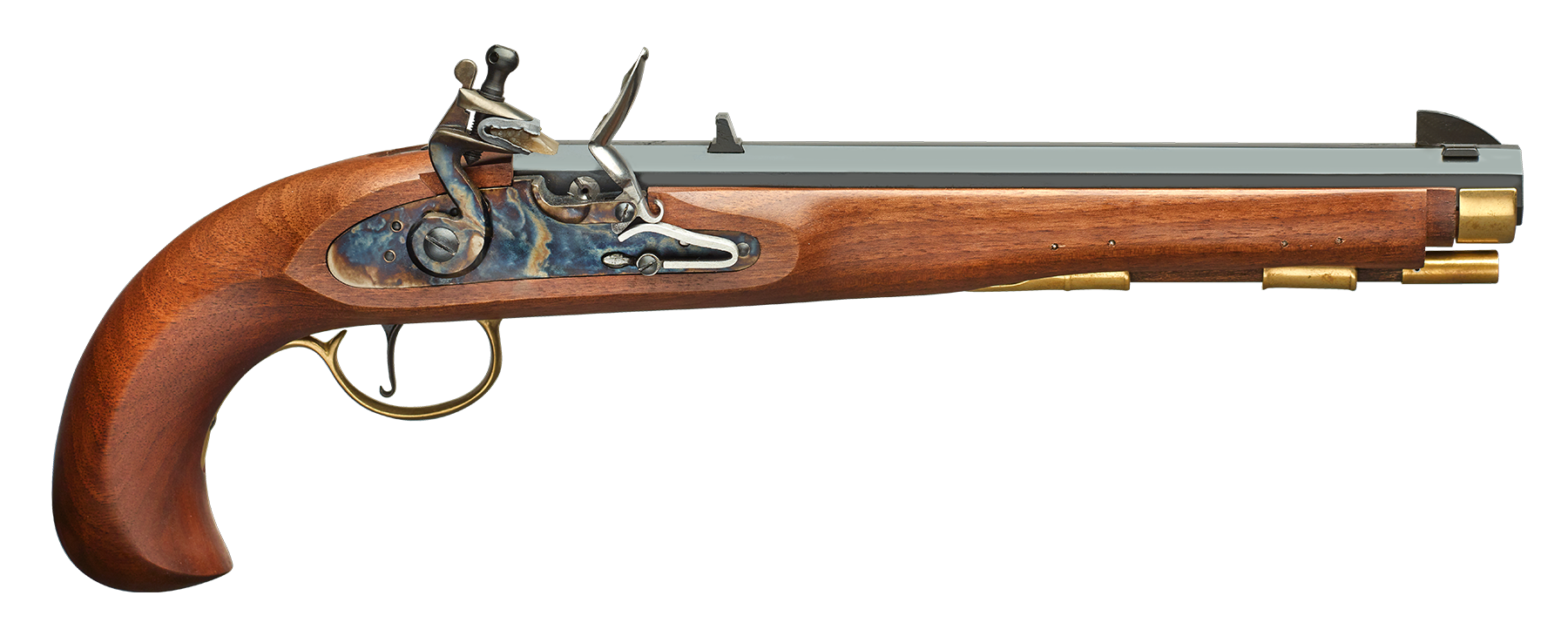
Queen Anne Pistol
(S.328)
The pistol was in production since the 1600 in different versions and sizes and became popular in 1700 during the reign of Queen Anne I.
Outside the national territory, the pistol was used during the Empire’s expansion. A significant number of these guns were used by the revolutionary forces during the American Revolution, and these pistols became in their possession during the siege of Boston.
Our reproduction is made with walnut stock, featuring a chromed, satin finished barrel, old silver tempered lock and brass fittings. The characteristic butt cap shows the image of a grotesque masque.
Available in .50 smooth bore caliber.
Buy now

Frontier Rifle
On the Western fringes of the British colonies, life was hard and often very dangerous for the explorers, settlers, and commercial hunters and trappers who ventured there. The people who emerged from that life, men like Daniel Boone, became American icons of rugged individualism, self-reliance, and bravery in their own times.
Unlike smooth bore muskets used by the regular army following the plan based on a huge volume of fire, little accuracy, but fast rearming speed; the guns used by the Frontiersmen had to be extremely accurate for hunting in wild environments, they had to be reliable and lethal at the first shot. This logic was also applied in the defense field, making these shooters feared adversaries during the years of the American Revolution.
Our reproduced rifles are available in two different versions:
Standard (S266) with walnut stock, brown barrel, case hardened lock and brass fittings.
Deluxe (L268) with a fine tiger maples stock, embellished by an elegant patch box, brown barrel, case hardened lock and brass fittings.
Both versions are equipped with double set trigger.
Available in the .45 / .50 / .54 calibers.
Buy now
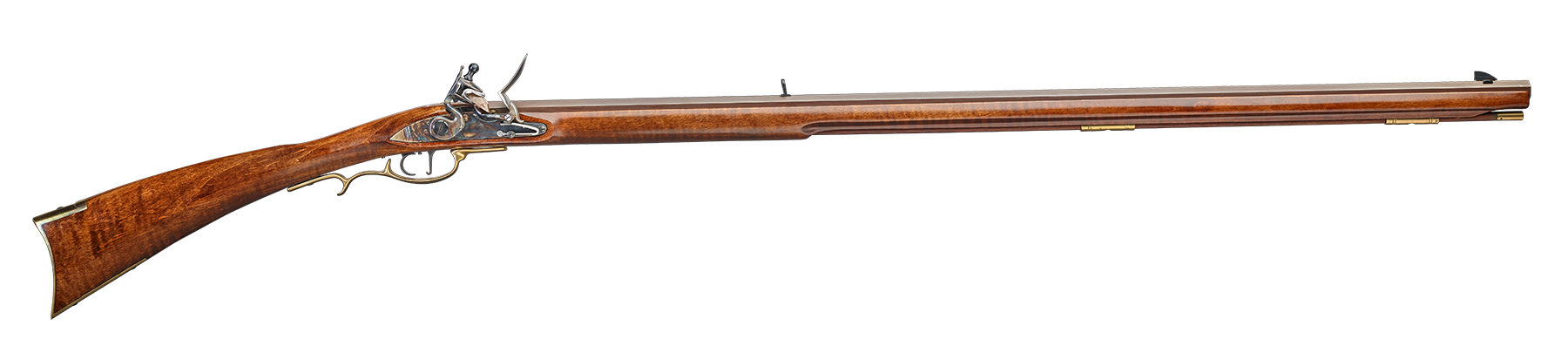
Kentucky Rifle
(S.210)
The longrifle was first developed in Pennsylvania by gunsmiths from the old Continent and later produced in other areas of North America.
Maryland, Virginia, North and South Carolina, Ohio, New York, while the basic design of the rifle remained the same, gunsmiths from different areas introduced small aesthetic and decorative variations, thus creating interesting varieties of this beautiful rifle.
Our reproduction is made with American walnut stock, blue barrel, case hardened lock and brass fitting.
The stock features an elegant patch box.
Available in .32 / .45 / .50 caliber.
Buy now
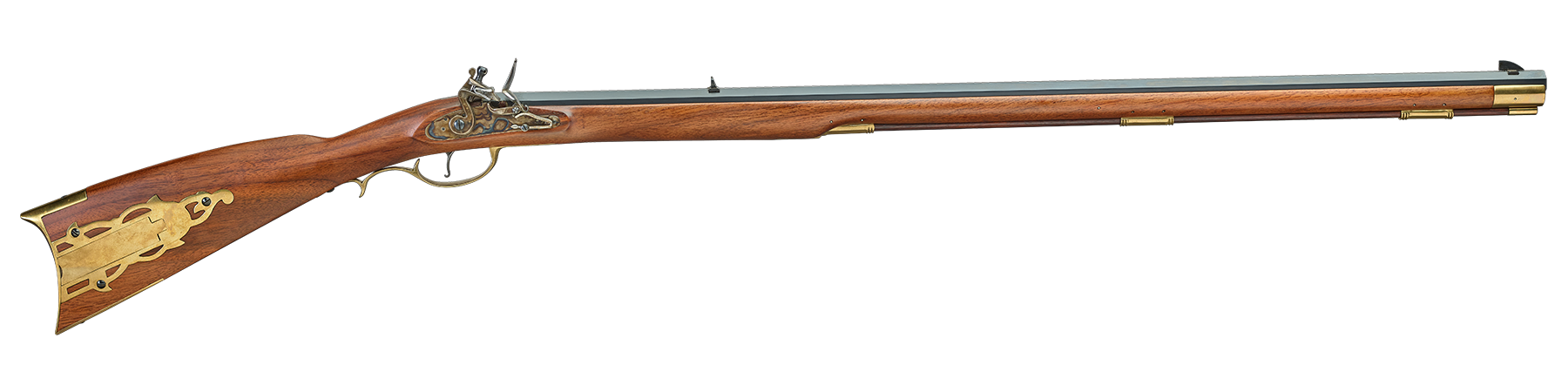
Pennsylvania Rifle
Example of the Iconic rifles produced in America during the time of the Revolution.
Light, of tapered shape, the rifle was addressed to hunting and personal defense within mountains territories and endless forests.
The longrifle was a tool forged to tame the North American wilderness in the mid 1700s. While the European made Jaeger rifles that settlers first brought to the colonies were typically short barreled, American gunsmiths realized that lengthening the rifle’s barrel, over 40 inches was not uncommon, allowed a longer sight radius and increased accuracy with more time for the black powder charge to fully burn which boosted bullet velocity and range. With a longrifle and the marksmanship skill to use it, a man had a better chance of taking game spotted at long range and could hold off an attacker armed with a bow or musket from a safe distance.
These rifles equipped American volunteer rifle companies from Pennsylvania, Maryland and Virginia, who fought under General George Washington’s command during the Siege of Boston in 1775-1776.
Our reproduced rifle is available in three different versions:
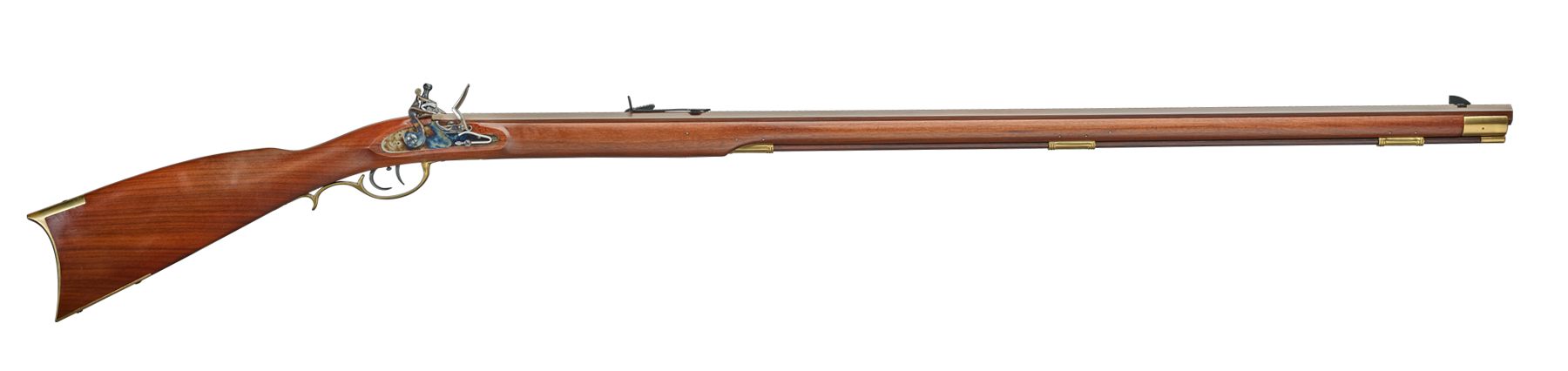
Standard (S275) with walnut stock, brown finished barrel, case hardened lock and brass fittings.
Buy now
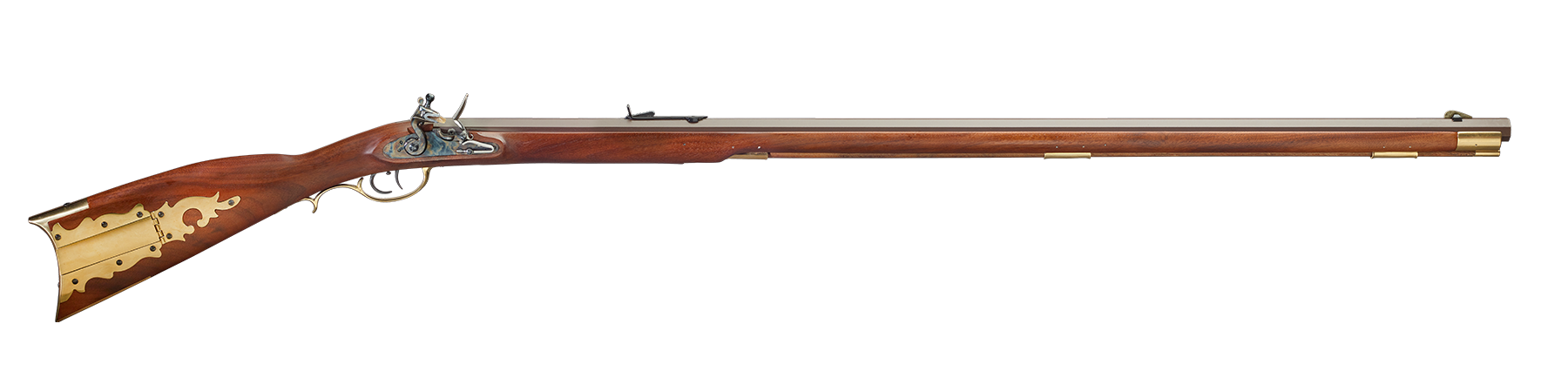
Pennsylvania Dixie (S276) with the finishing identical to the standard model, but with the stock embellished by an elegant brass patch box.
Both versions are equipped with the double set trigger.
Available calibers: .32 and .45.
Buy now

Scout ( S.222 )
Short version of the rifle, light and easy to handle.
Available calibers: .32 / .45 / .50
Buy now
Indian Trade Musket
(S.282)
Native Americans played a key role in the war of Independence; They supported the Armies of both sides, providing their services as soldiers, explorers and diplomats. Their contribution was fundamental in the progress of many battles that determined the outcome of the war.
Native Americans were often equipped with simpler rifles than those in the hands of the Colonists, cheaper guns and of small caliber.
These rifles were used as trade goods between trading companies and local populations.
Our reproduction features walnut stock, brown finish barrel, case hardened lock and the fitting made of brass.
There are distinctive features, such as the decorative brass serpent at the opposite side of the lock and the large guard.
Available in smooth bore 20 gauge.
Buy now
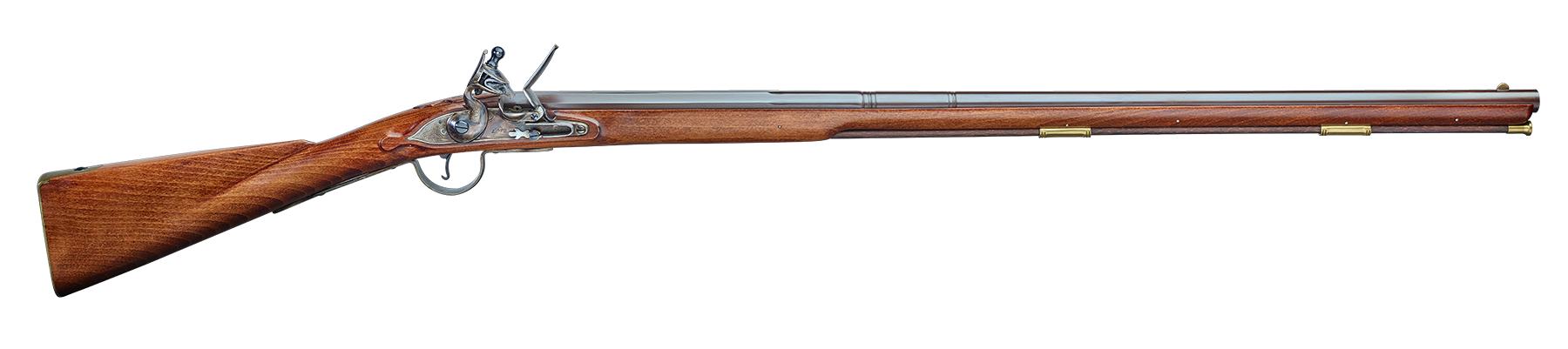
Brown Bess
(S.260)
The Brown Bess was the musket used by the English troops during the Empire extension and consolidation in India and America. Veteran of the Seven Years War, it was used also by Wellington during the war in the Iberian Peninsula and at Waterloo. The infantry troops of almost the entire world used it, from the European Nations allied with the English to the Mexican troops, who used it until the last battle with United States on the 13th of September 1874 at Chapultepec.
Our reproduction of the musket features walnut stock, chromed satin barrel and lock, brass fittings.
The lock shows the signature of the gunsmith William Grace and the date 1762, with the crown and the letters GR (George Reining)
Available in the smooth bore .75 caliber.
Buy now
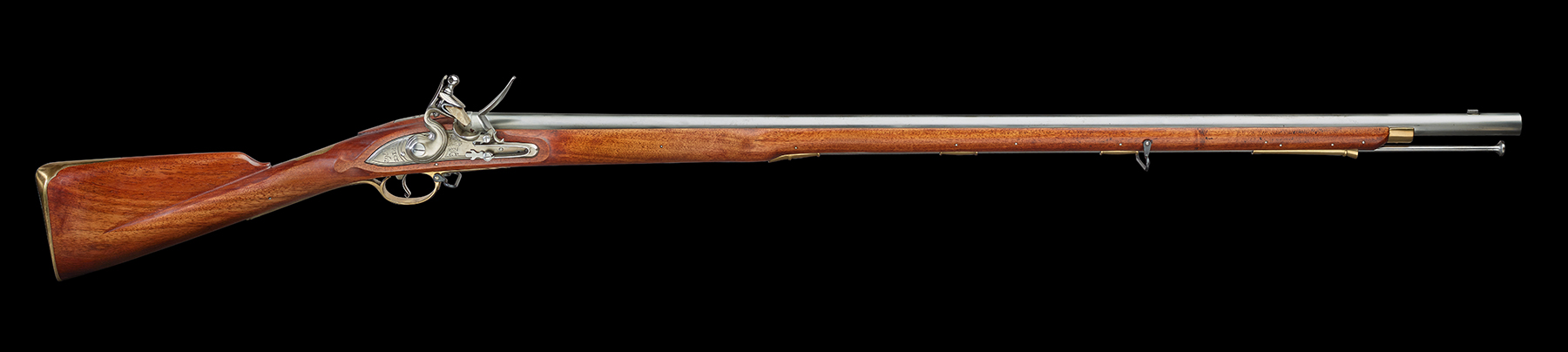
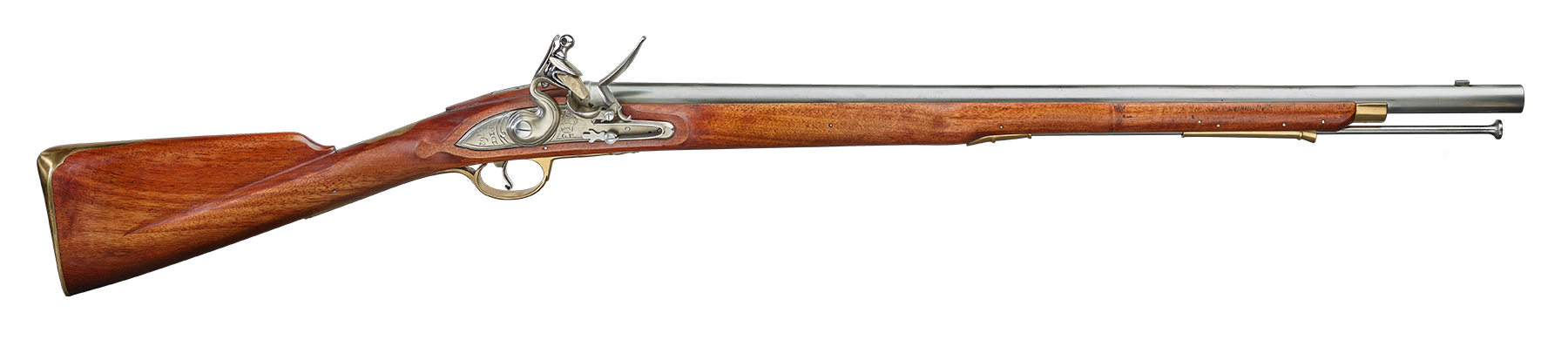
Brown Bess Carabine
(S.262)
Between 1756 and 1813 the English “Board of Ordnance” required the production of shorter versions of the regular infantry musket. The barrel’s lengths varied from 26” to 37”, equipping the corps of the Dragoons, the Grenadiers, the Royal Horse-Guards and the Artillery, as well as some volunteers corps.
Our reproduction of the musket features walnut stock, chromed satin barrel and lock, brass fittings.
The lock shows the signature of the gunsmith William Grace and the date 1762, with the crown and the letters GR (George Reining)
Available in the smooth bore .75 caliber.
Buy now
1763 Léger (1766) Charleville
(S.255)
In 1763 France adopted a new infantry musket to answer the needs of an accelerated fire coming from the war tactics developed during the Seven Years War. The new gun was found too heavy and was replaced after only three years by the 1766 Model, promoted by M. de Montbeillard, inspector of the Manufacturer of Saint-Etienne, built in more of 150,000 units until 1769. After this date it has been replaced by the Model 1770/71 and the muskets given back from the soldiers have been used in 1775 when the American Independence War started and France distributed numerous 1766 muskets to the troops of the new born United States of America.
Our reproduction of the musket features walnut stock, chromed satin barrel and lock, brass fittings.
The lock shows the writing Charleville, the font reproduced like for the original model.
Available in the smooth bore .69 caliber.
Buy now